If you use a forklift truck with drum handling attachments, LOLER applies to your equipment. That means legal obligations around inspection, testing and record-keeping. If those aren't in place, you're exposed to potential enforcement action, equipment failure and, most seriously, workplace injury.
This guide explains exactly what LOLER requires for drum handling equipment, how the inspection and thorough examination process works in practice, and how St Clare Engineering's servicing programme is designed to help you meet those obligations with minimum disruption to your operation.
What is LOLER?
LOLER stands for the Lifting Operations and Lifting Equipment Regulations 1998. It is a piece of UK health and safety law that sets out requirements for all lifting equipment used in the workplace — covering everything from cranes and hoists to forklift trucks and their attachments.
The core purpose is straightforward: to ensure that lifting equipment is strong enough for its task, properly maintained, regularly inspected and operated safely. The regulations apply to employers, the self-employed and anyone who controls lifting equipment in a workplace.
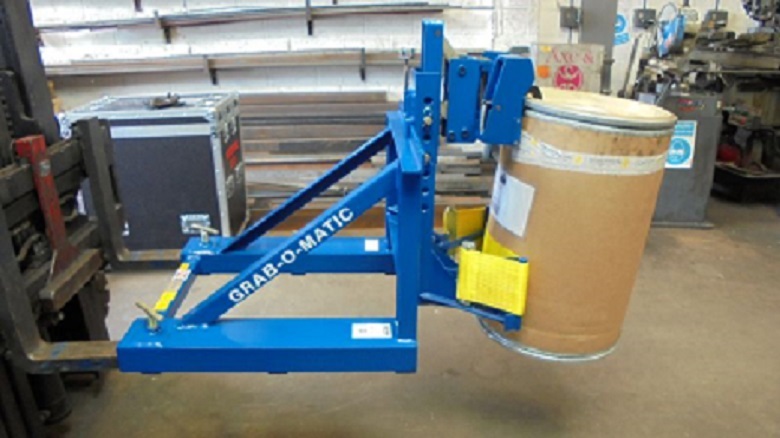
For drum handling purposes, LOLER covers forklift truck drum attachments: rim grippers, waist grippers, base grippers, drum rotators, and pedestrian drum handlers. Any attachment used to lift, move or tilt a drum is lifting equipment under the regulations.
LOLER works alongside PUWER, the Provision and Use of Work Equipment Regulations 1998, which cover the broader safe use, maintenance and suitability of work equipment. The two sets of regulations overlap: a forklift truck drum attachment must comply with both.
Does LOLER apply to your drum handling attachments?
Yes, if you use a mechanical forklift attachment to lift, move or tilt drums in a UK workplace.
The regulations apply whether the attachment is owned, hired or leased. If you use drum handling equipment on your site, the responsibility for LOLER compliance sits with you as the employer or the person controlling the equipment, not with the manufacturer or supplier.
Common situations where LOLER applies to drum handling:
• A forklift truck fitted with a rim grip or waist grip drum handler, used regularly in a warehouse or production facility
• A pedestrian drum handler used to move drums around a site without a forklift
• A drum rotator or tipper used for controlled pouring or decanting
• Hired drum handling equipment brought in for a short-term project or shutdown
If in doubt, the HSE's guidance on LOLER is clear: if the equipment is designed to lift a load (a drum is unquestionably a load) LOLER applies.
What does LOLER actually require?
There are four main obligations under LOLER that are relevant to drum handling equipment.
1. Equipment must be suitable and of adequate strength
Before using drum handling equipment, you must be satisfied that it is suitable for the intended task, so the right type for your drums, rated to handle the weight involved, and compatible with your forklift truck. Using the wrong attachment for the job is a compliance failure as well as a safety risk.
All Grab-O-Matic drum handling attachments are supplied with a Safe Working Load (SWL) certificate and are clearly marked with their rated capacity. Choosing the correct model for your drum type and weight is the first step to LOLER compliance.
2. Thorough examination at specified intervals
This is the most important ongoing obligation. LOLER requires that lifting equipment including drum handling attachments is subject to thorough examination at regular intervals by a competent person.
For drum handling attachments, the required interval is at least every 12 months. However, where the equipment is used to lift people, or where the operating environment is particularly harsh (high temperatures, corrosive substances, very high cycle rates), the interval may be reduced to six months.
A thorough examination is not the same as a routine service. It is a systematic, detailed inspection by someone with the training and knowledge to detect deterioration before it becomes dangerous. The examiner must produce a written report, and any defects identified must be rectified within the timeframe specified in that report.
3. Examination before first use (and following exceptional events)
New drum handling attachments should be thoroughly examined before being put into service for the first time, unless they come with suitable evidence that the examination has already been carried out. All Grab-O-Matic attachments are proof-load tested and issued with a test certificate before leaving the factory: this satisfies the initial examination requirement.
LOLER also requires a thorough examination following any exceptional event that may have affected the equipment's safety, for example, if the attachment has been involved in an overload, a collision, or any incident that could have caused structural damage.
4. Records must be kept
The written report produced after each thorough examination must be kept. If the HSE visits your site or an incident occurs, you will need to demonstrate that your equipment has been examined at the required intervals and that any defects identified have been addressed. The report should be retained for the lifetime of the equipment.
What does a ‘thorough examination’ involve?
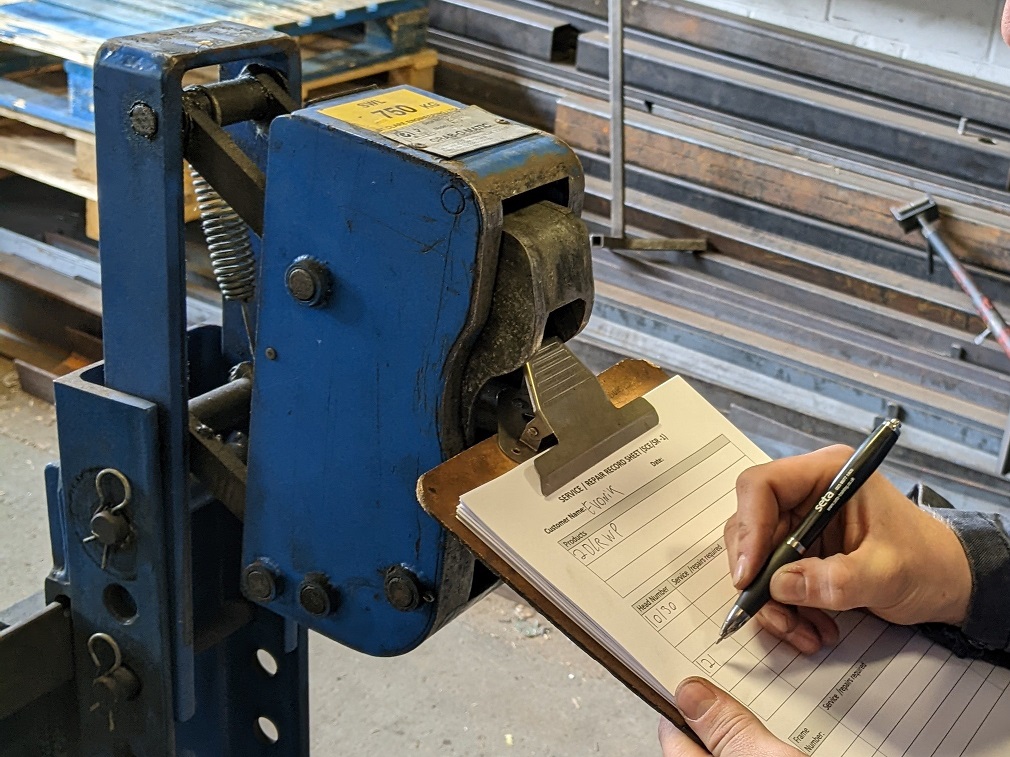
A thorough examination of a drum handling forklift attachment is a detailed visual and physical inspection by a competent person, typically an experienced engineer with the knowledge to assess the type of equipment involved.
For a Grab-O-Matic drum handler, a thorough examination would typically cover:
• Structural integrity: checking the main frame, pillars and arms for cracks, deformation, corrosion or weld failures
• Gripping mechanism: inspecting the jaws, springs and pivot points for wear, damage or loss of function
• Fork pockets and securing arrangement: checking that the attachment locates securely onto the fork tines and that the clamping mechanism is in good order
• Safe Working Load markings: confirming that the SWL is clearly and legibly marked on the equipment
• Overall condition: general assessment of cleanliness, paint condition, lubrication and any signs of damage from previous use
The examiner will produce a written report recording what was examined, whether any defects were found, and if defects are present, whether the equipment should be taken out of service immediately or whether there is a timescale within which repairs must be completed.
What is the difference between a thorough examination and a service?
This is a question that causes genuine confusion, and it matters: see the LOLER Approved Code of Practice (ACOP).
A thorough examination is a legal inspection under LOLER. It is carried out by a competent person who is independent of the day-to-day operation of the equipment. The purpose is to detect deterioration and certify the equipment's continued fitness for use. The outcome is a written report with legal standing.
A service is maintenance: cleaning, lubrication, adjustment and replacement of worn parts. It keeps the equipment in good working order but does not fulfil the LOLER inspection requirement on its own.
The two are complementary, not interchangeable. In practice, combining an annual service with the LOLER thorough examination is efficient — the equipment is examined at the same time as it is serviced, minimising disruption. This is the approach St Clare Engineering recommends and supports through its annual service programme.
What are your responsibilities as an employer?
Under LOLER, the employer or the person controlling the lifting equipment carries the primary responsibility for compliance. In practical terms this means:
• Ensuring drum handling attachments are thoroughly examined at the required intervals and that valid examination reports are held on file
• Acting on any defects identified in an examination report within the specified timeframe: equipment must be taken out of service if a defect poses an immediate risk
• Ensuring operators carry out daily pre-use checks before using drum handling equipment: checking for visible damage, confirming secure attachment to the forks, and verifying the load does not exceed the SWL
• Keeping records of examinations, inspections and any maintenance or repairs carried out
It is worth noting that responsibility does not transfer to the manufacturer or the supplier of the attachment. Even if you purchase a brand-new Grab-O-Matic with full test certification, the ongoing obligation for annual thorough examinations rests with you once the equipment is in service.
How St Clare Engineering's servicing programme supports LOLER compliance
St Clare Engineering has offered a collect-and-return servicing programme for Grab-O-Matic drum handling equipment since the company was established in 1959. The programme is designed specifically to make LOLER compliance straightforward for customers.
What the annual service includes:
• Full visual and mechanical inspection of the attachment: covering the gripping heads, frame, fork pockets, springs, pivots and all wear points
• Cleaning and repainting as required
• Lubrication of all moving parts
• Replacement of any worn components identified during inspection
• Proof-load test following any significant repair
• Return of the equipment with a service record documenting what was inspected, what was found, and what work was carried out.
How it works:
For UK customers, St Clare Engineering will collect the attachment (either the gripping heads alone or the complete unit), carry out the full service and inspection, and return it with the minimum of downtime. If keeping operations running during the service period is a priority, loan gripping heads or a complete loan unit can be supplied free of charge (excluding delivery and collection costs) while the work is carried out.
International customers can arrange to ship the equipment to the Hampshire facility, or arrange for local inspection through St Clare's network of international distributors.
An important note on independence:
LOLER requires that a thorough examination is carried out by a competent person. For the examination to carry full legal weight, the examiner should be sufficiently independent and impartial — meaning they are not the person responsible for the day-to-day use of the equipment. Having St Clare Engineering as the manufacturer of the equipment carry out the annual service and inspection satisfies this requirement: the inspection is being carried out by engineers who know the product inside out and are entirely independent of the customer's operation.
Practical steps to stay LOLER compliant
If you are starting from scratch, or if you are not confident that your drum handling equipment's inspection history is up to date, here is a straightforward approach:
1. Identify all drum handling attachments in use on your site, including any that are stored or only used occasionally. LOLER applies to equipment in use, but it is good practice to maintain examination records for all lifting equipment on site.
2. Check whether a current thorough examination report exists for each attachment. If not (or if the last examination was more than 12 months ago) the equipment needs examination before continued use.
3. Schedule the annual examination: either by arranging with St Clare Engineering to collect the attachment for service and inspection, or by engaging a competent examiner independently.
4. Set up a reminder system so the next examination is not missed. A simple calendar reminder set 11 months after each examination is enough.
5. Brief your operators on their daily pre-use check obligations: confirming the attachment is securely fitted, visibly undamaged, and being used within its rated capacity.
A note on LOLER and drum handling hire
If you hire drum handling equipment rather than owning it outright, LOLER still applies, but the responsibility is shared.
The company supplying the hire equipment has an obligation to ensure it is thoroughly examined and in a safe condition when it is provided to you. St Clare Engineering supplies all hire equipment with current test certification. However, once the equipment is in use on your site, you as the hirer carry the day-to-day responsibility for safe use, operator checks, and ensuring the equipment is not used beyond its rated capacity or beyond the date of the next required examination.
If a hire period extends beyond 12 months (which can happen with longer-term hire arrangements) a further thorough examination will be required before the equipment continues in service.
Need to book a service or get your equipment examined?
If your drum handling attachments are due for their annual service and LOLER inspection, St Clare Engineering can help. We manufacture the Grab-O-Matic range and carry out the annual service and examination from our Hampshire facility, with a collect-and-return service for UK customers and loan units available to minimise downtime.
FAQs
Does LOLER apply to forklift drum handling attachments? Yes. Any attachment used to lift a drum is lifting equipment under LOLER 1998, whether owned, hired or leased.
How often does a drum handling attachment need a thorough examination? At least every 12 months. In harsh operating environments — high temperatures, corrosive substances, high cycle rates — every six months is more appropriate.
What is the difference between a thorough examination and a service? A thorough examination is a statutory legal inspection under LOLER, producing a formal written report. A service is maintenance. A service does not fulfil the LOLER inspection requirement on its own.
Who is responsible for LOLER compliance? The employer or the person controlling the equipment — not the manufacturer or supplier.
Does a new Grab-O-Matic need a thorough examination before first use? No. All Grab-O-Matic attachments are supplied with a Declaration of Conformity and test certificate, which satisfies the initial examination requirement under LOLER Regulation 9.
What records do I need to keep? The written report from every thorough examination must be kept for the lifetime of the equipment, whether or not defects were found.
Does LOLER apply to hired drum handling equipment? Yes. The hirer takes on responsibility for safe operation and daily checks once the equipment is in use on their site.
Can St Clare Engineering carry out the annual examination? Yes. We carry out a full service and inspection at our Hampshire facility, with a collect-and-return service and loan units available