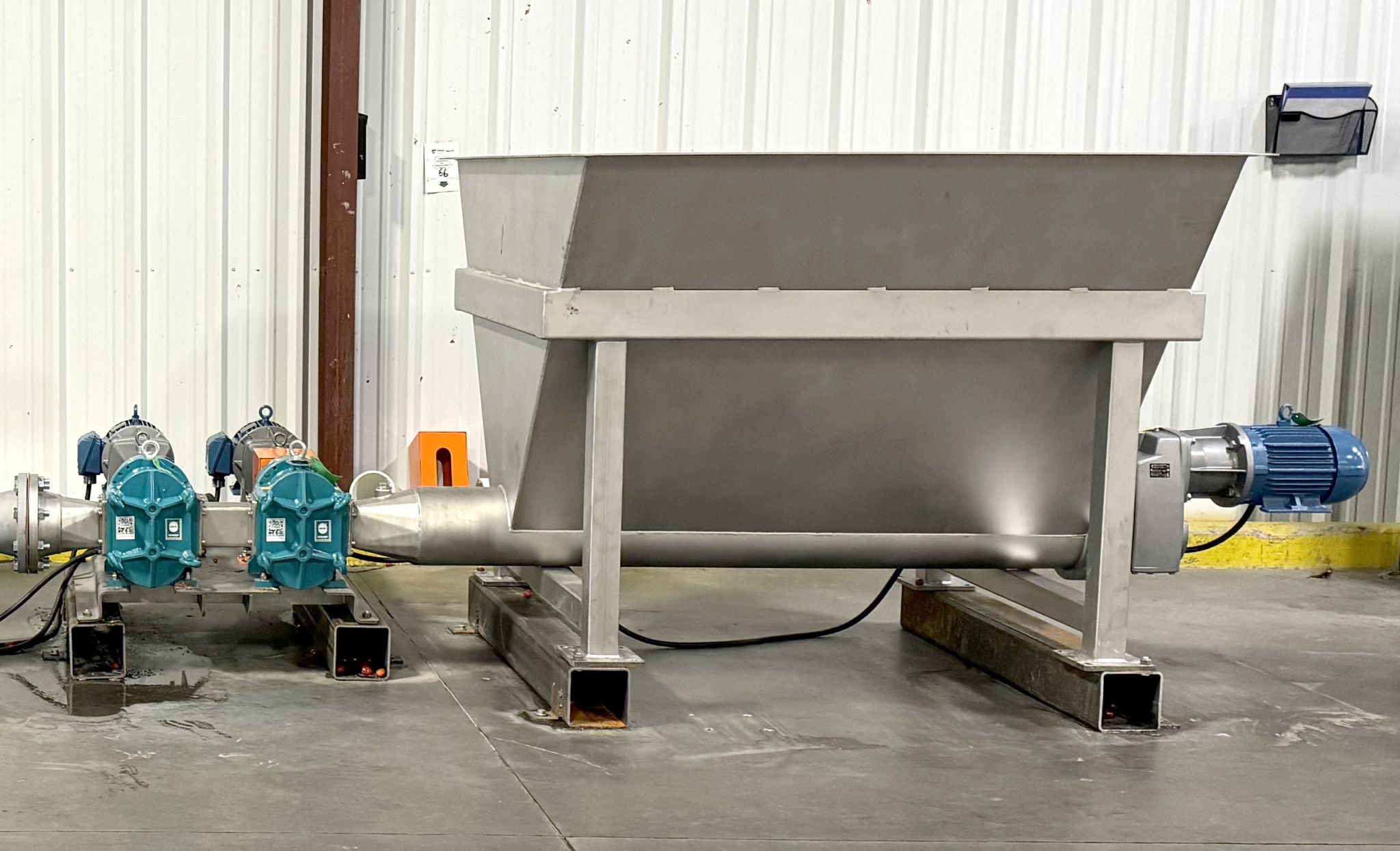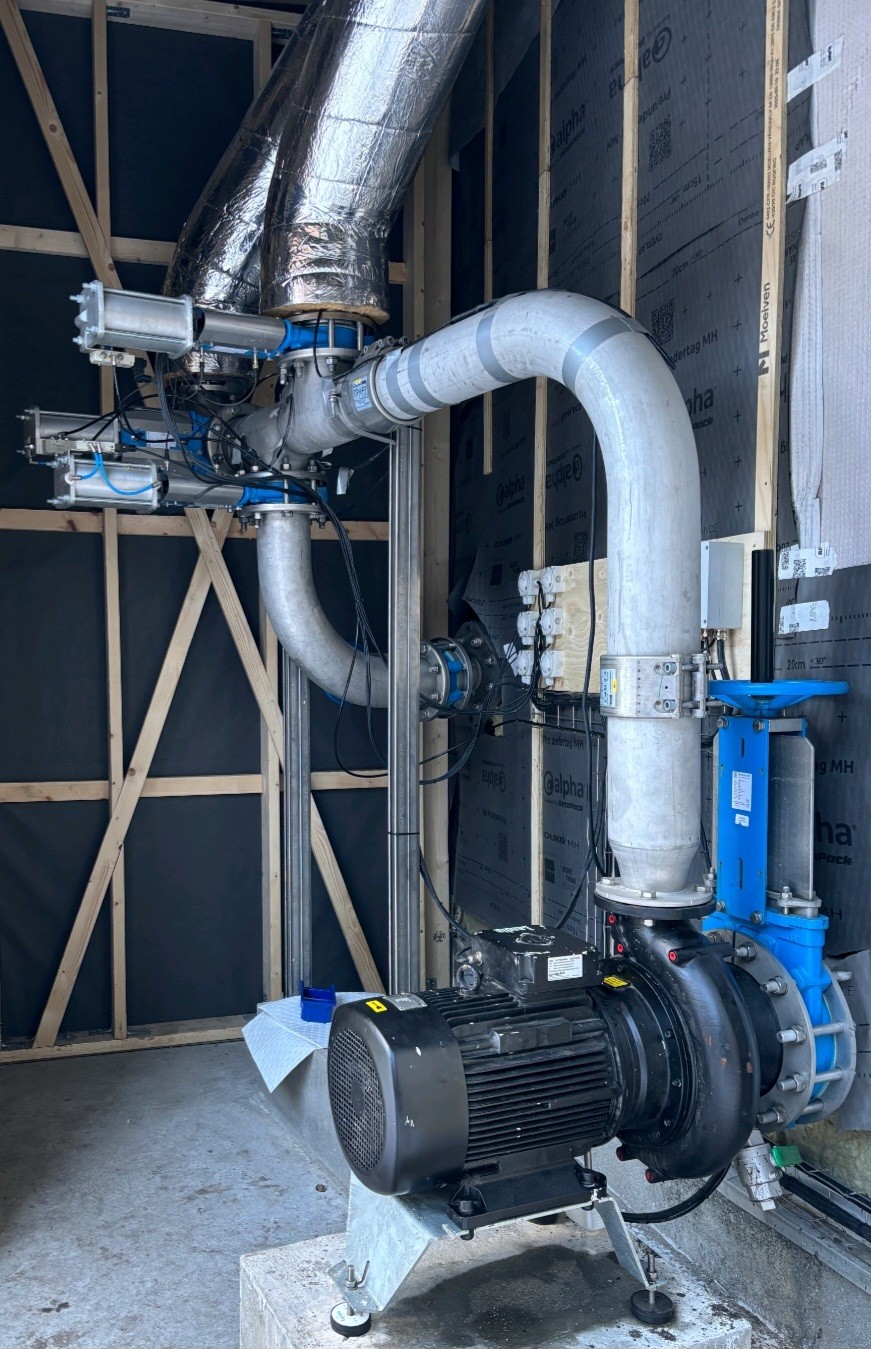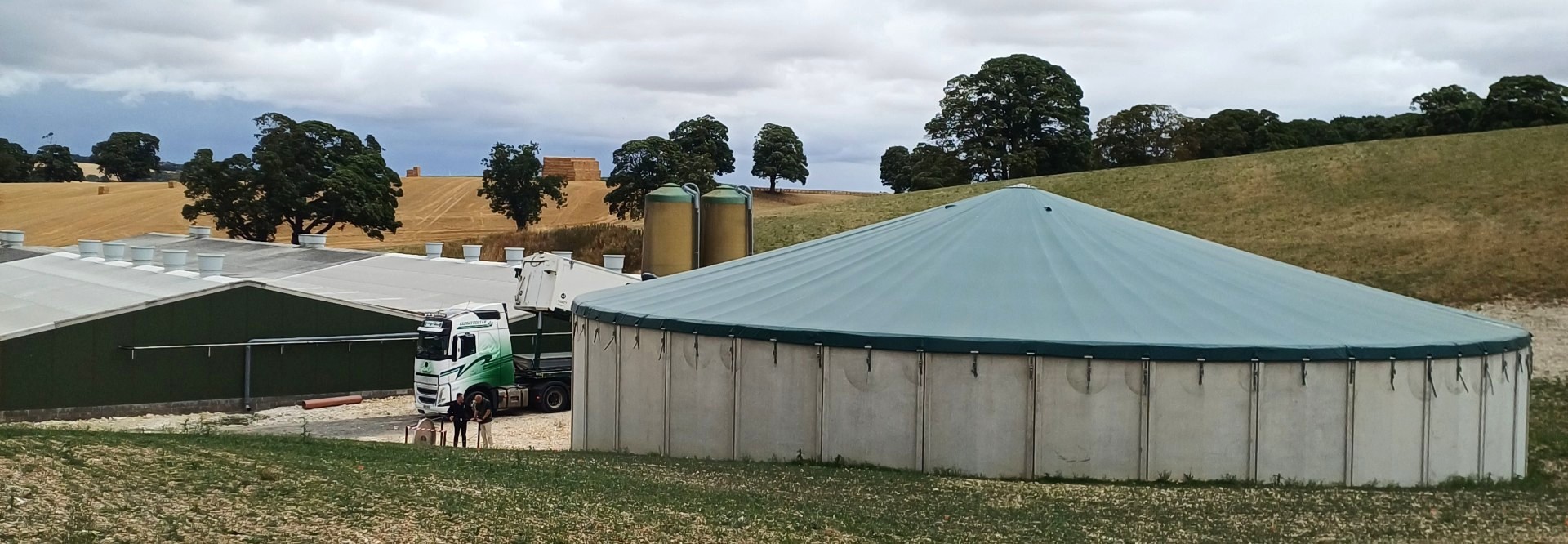
The installation was completed together with with a pump and mixer, installed by Landia.
At the 600-acre, largely arable farm, which mainly produces wheat, pig numbers were increased from 2,000 to 3,200, prompting the need for a suitable slurry store, with pump and mixer system.
“Before we chose A-Consult & Landia, there was a suggestion that we could use a tractor to drive a PTO-driven stirrer to mix the slurry, but that wouldn’t work for us because our two tractors are normally used as a pair,” said farm proprietor, Nigel Lee.
“We preferred the option of an electrical submersible mixer, which would do the job at the push of a button at minimal cost; offset from the 50kWp (kilowatt-peak) solar panels on our grain store.”
Whilst weighing up all the pros and cons, what ultimately sealed the decision for Nigel was visiting another (larger) pig farm in Yorkshire that already had the A-Consult tank and Landia pump/mixer set-up.
“Seeing it all first-hand showed me how simple yet very effective this installation would be,” continued Nigel.
“Cost-wise, there wouldn’t have been much in it at first, but the A-Consult concrete tank and the Landia equipment also made far more economic sense for the long term.”
While traditionally, steel tanks were noticeably cheaper until substantial material price increases, the lifetime of an enamel-lined or glass-lined tank would be 20-25 years, whereas the design life of a concrete tank will typically be 50 years. It is also not unusual for Landia pumps and mixers (suitably serviced) in the pig industry to last 20-plus years. The Landia mixer is one of the few that has twin mechanical seals to prevent ingress, compared to most that only have one mechanical seal and one lip seal.
“Also,” said Nigel, “installation was easy. We’d sorted out the hard core for the base, and the panels for the new tank were up in a day.”
Unlike most, the A-Consult tank benefits from tensioning wires within the panels, so that they can’t suffer from corrosion inside the tank, or from weather conditions on the outside. Rubber seals on the joints also provide longevity by allowing slight movement when filling and emptying.
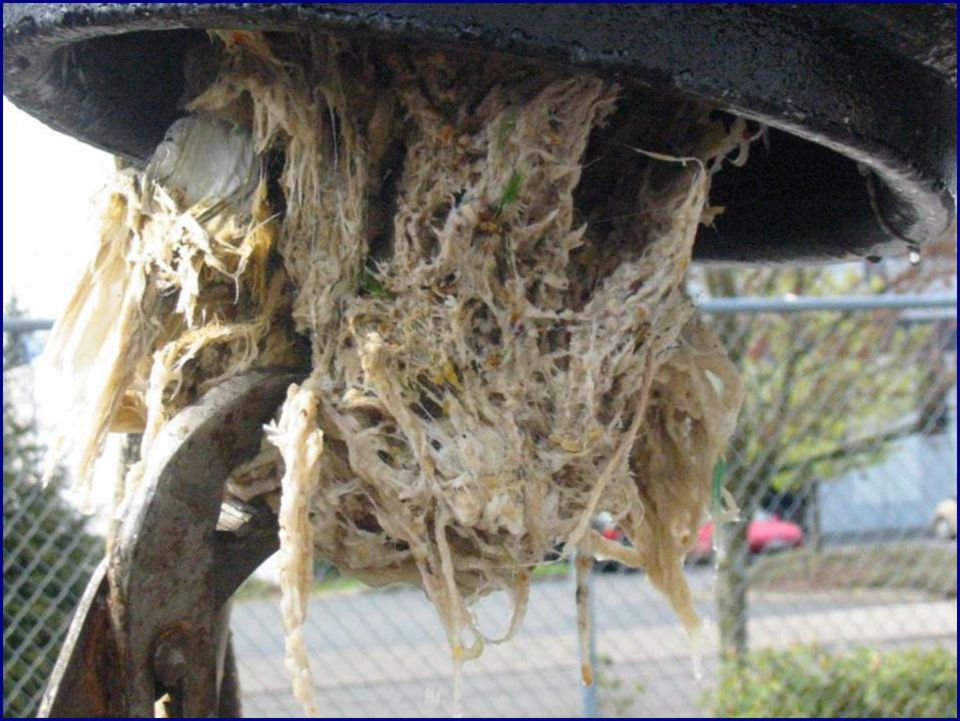
Howard Burton from Landia, said: “Some pig farms like the flexibility of the portable trolley mixer from Landia, which stops the build-up of crust that would attract flies. The dry-well 15kW Landia Chopper pump will always deal easily with ingress of foodstuffs or solidification of bedding materials, using its external knife system to continuously reduce the particle sizes of solids. It’s a very neat installation with the covered tank, pump, mixer, ladder, gantry, manway, top-fill pipe and transfer pipe, with just a 24-hour timer on the mixer and manual control on pump, it pretty much looks after itself.”
Saving of between £40,000 to £50,000 per year on our fertilizer bill
Even the first spread of slurry from the new A-Consult/Landia set-up provided new benefits, as Nigel Lee explains: “Because the Landia mixer does such a good job of homogenising the slurry, we get a better uptake with uniformed nitrogen, phosphate, potash and trace elements. Nitrogen had increased from about four and a half kilos per cube to five and a half, which I thought was quite a big jump, really, in percentage terms.”
He added: “Also, with fertiliser prices still so high, it is more and more critical to utilize the slurry to the best of your ability. We’re on course to make a saving of between £40,000 to £50,000 per year on our fertilizer bill.
Retains the valuable nitrogen for use in our soil for crops
“Overall, we are very happy with the new system. The covered A-Consult tank helps protect the environment by greatly reducing ammonia and methane from going into the atmosphere - and retains the valuable nitrogen for use in our soil for crops. The slurry is applied to oilseed rape and wheat in Spring, which maximises the benefits of the nitrogen, and minimises the loss from either volatilization or leaching.
“The new store also gives us far more flexibility, especially during prolonged rainfall, allowing us to apply the slurry earlier, or delay, if necessary, from the typical March/April period. This extra breathing space is a big plus.”